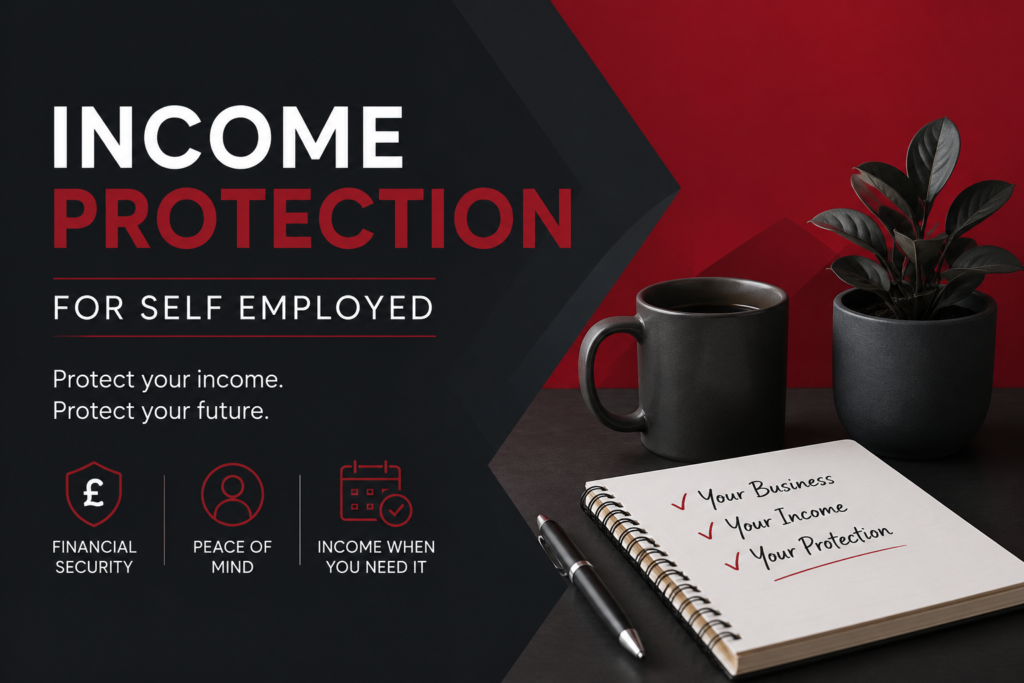
PROTECTION OPTIONS FOR SELF EMPLOYED
What Happens if You’re Self-Employed and Can’t Work?
Being self-employed has many freedoms. You choose your hours, your clients, and how you work. But it also means you don’t have the safety net that some employees get if they can’t work due to illness or injury.
If you’re self-employed and suddenly unable to work, how would you manage your bills, mortgage, or rent? Would your business keep running without your input?
This is where protection insurance becomes important.
In this blog, we’ll explain your options for protecting yourself financially. We’ll cover the main types of protection insurance — life insurance, critical illness cover, and income protection — and what they mean for self-employed workers in the UK.
Why Protection Insurance Matters for the Self-Employed
Unlike employees, the self-employed usually don’t get sick pay, statutory or employer-paid benefits, or workplace protection plans.
If illness or injury strikes, your income stops unless you have a financial safety net.
Without money flowing in, everyday costs like rent, bills, and business expenses still need paying. Protection insurance can step in to help cover these costs and give you time to recover without risking your financial security.
Types of Protection Insurance for the Self-Employed
1. Income Protection Insurance
This type of insurance is designed to replace part of your income if you can’t work for a while due to illness or injury.
How it works:
If you’re off work due to sickness or disability, income protection pays you a monthly amount until you’re able to work again or the policy term ends.
What it covers:
Usually around 50–70% of your average income before tax.
Waiting period:
You can choose how long you wait before payments start — options typically range from 1 month to 6 months.
Example
Sarah is a self-employed graphic designer. After a car accident, she was unable to work for 4 months.
Her income protection policy stepped in after a 1-month waiting period and paid her monthly benefits. This allowed Sarah to cover her mortgage and living costs while she focused on recovery.
2. Critical Illness Cover
Critical illness insurance provides a lump sum payment if you’re diagnosed with a serious illness covered by the policy, such as cancer, stroke, or heart attack.
How it works:
The policy pays out a fixed sum if you’re diagnosed with one of the serious illnesses listed in the policy.
What it covers:
The lump sum can help pay medical bills, cover lost income, or keep your business running.
Example
James runs a small plumbing business. When he was diagnosed with cancer, his critical illness cover paid a lump sum.
This money helped him hire temporary help for his plumbing jobs, so the business stayed afloat while he underwent treatment.
3. Life Insurance
Life insurance protects your loved ones financially if you die. This can be especially important if you have family or business partners who rely on your income.
How it works:
Pays out a lump sum to your chosen beneficiaries if you die during the policy term.
What it covers:
The payment can be used to clear debts, pay funeral costs, or support your family financially.
Example
Emma is a self-employed photographer and the main earner for her family.
She took out a life insurance policy to make sure her partner and children would be financially secure if something happened to her.
What to Consider When Choosing Protection Insurance
Understanding Your Income and Expenses
When you’re self-employed, your income can vary month to month. It’s important to think about your average earnings and ongoing costs when choosing your cover level.
How Long Can You Wait for Payouts?
If you want faster financial help, a shorter waiting period on income protection might suit you. However, shorter waiting periods usually increase the monthly premiums.
How Long Will You Need Cover?
Think about how long you want your protection to last. Some choose cover that lasts until retirement age, while others prefer shorter terms.
Combined Covers
Many insurers offer plans that combine different types of protection, such as income protection with critical illness cover. This way, you get broader protection in one policy.
Practical Tips for the Self-Employed
- Keep records of your income to help when choosing cover amounts and proving your earnings for a claim.
- Review your policies yearly to make sure your cover still fits your circumstances.
- Be honest in your application and provide full, accurate information to avoid problems later if you need to claim.
- Shop around, as protection insurance can vary widely in price and features.
Final Thoughts: Protection Insurance Is a Vital Safety Net
Being self-employed means taking control of your work and your finances but it also means bearing the financial risks alone.
Protection insurance offers peace of mind, enabling you to focus on recovery if something unexpected happens.
You don’t need to face uncertainty alone. There are protection policies designed with self-employed people in mind to help secure your income, your health, and your family’s future.
If you’re self-employed and thinking about protection insurance, the team at BSL Assured can help you understand which options fit your needs.
Speak to BSL Assured for clear, personalised guidance.
Speak to BSL Assured today to explore your protection options and get a plan tailored to your self-employed lifestyle.